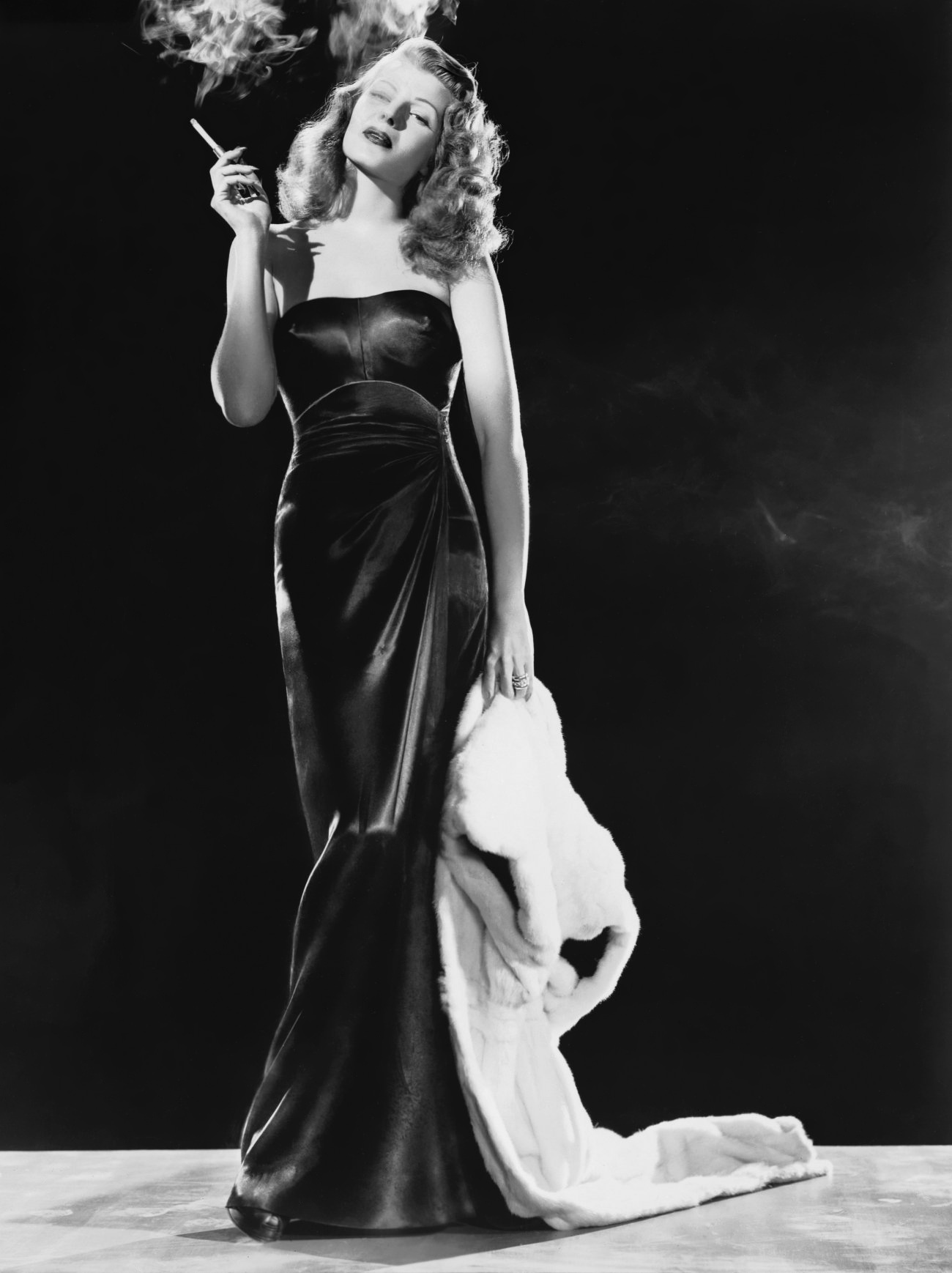
While it proved unpopular with contemporary audiences (Welles had Hayworth play against type, and had her cut and bleach her trademark red locks) and the studio cut almost an hour from the film, The Lady from Shanghai has fared well since its 1946 release and is now considered among the greats of film noir. Married, but in the midst of a divorce, Orson Welles directed and starred oposite Rita Hayworth in this, their only collaboration. While the story is somewhat disjointed and much is left to the viewer to guess at and fill in, the work is suspenseful and exotic. It keeps one's attention, even if it's not fully amenable to comprehension.
 Merchant marine Michael "Black Irish" O'Hara (Welles) crosses paths with the elegant Elsa (Hayworth) as she rides through central park in a horse-drawn carriage. Moments later O'Hara saves her from an attempted mugging, using a gun she was carrying, but had tossed aside, explaining to him afterwards that she didn't know how to use it. As he escorts her to safely to her car garage, they talk of crime, and he talks of defense attorneys, and how they can get off anyone with enough money. Is the San Francisco lawyer, Arthur Bannister, who just got a man acquitted for shooting his wife five time in the head the world's greatest lawyer, or the worlds greatest criminal? She offers him a job piloting her and her husband's yacht around South America. Thinking he's making a fool of himself, he say's he's not interested. He rips up her card. As he walks off, two men we'll see later in the film step out of the shadows and walk off. The garage attendant identifies Elsa, who has driven off, the rich and beautiful wife – of none other than Arthur Bannister.
 Hayworth is in top form. Her performance in Gilda is unbeatable, but there she plays a jilted lover putting on a tough face. Here she plays the femme fatale, the cold, calculating killer in chic clothing. Having lived in the fleshpots of coastal China, her occupation in such ports as Shanghai going unidentified, Elsa is a woman who "knows how to take care of herself." Part of that taking care of herself is knowing how to appear helpless, to play the victim. The good girl "doesn't smoke." But she knows how to light a cigarette. She "doesn't know how to shoot." But she carries a gun. Michael senses the contradiction. But he too is a man of the world, having killed a man in the Spanish Civil War. He knows that he should know better. But Elsa, or his "Rosalie" as he calls her, is just too enticing a temptation. He knows it's a game, and he figures he'll play.
 The film uses footage of Welles' unreleased South American good-will tour from the War. The story ends in San Francisco where scenes were shot on location. The thrilling final scene in a funhouse is a cinematographic classic. Hayworth is like an exotic animal, a caged white tigress whose grace and quiet beauty belie her underlying bestiality. One can easily see flashes of Sharon Stone's Catherine Tramell from Basic Instinct. Welles' work is a tour de force, even if it is hamfistedly edited by studio censors.
The film's minor flaws actually have one accidental benefit. The viewer will want to watch the film over again to figure out just what he might have missed the first time around. And there is a lot that you will notice if you pay close attention, homages to Hayworth's Gilda, recurring themes, a cameo of Errol Flynn. This film is fascinating, and you will want to watch it again and again. I have.
This film should be rented or made a part of your permanent library. It is available from Netflix. Here is a highlight from YouTube:
Here are parts two (lafrshaa) and three (lafrshab).
Read Femmes Fatales Part I and Part II