Miles Kendig (Walter Matthau), senior field man for the CIA, has once again outwitted Yaskov of the KGB (Herbert Lom), making the biggest bust of his career. But his by-the-book boss, Myerson (Ned Beatty), is tired of Kendig's liberty taking, and decides to promote him to a desk job. Kendig opts for retirement with his Austrian girlfriend Isobel von Schoenenberg (Glenda Jackson), but on his own terms, and the fun begins.
This delightful, light-hearted and witty 1980 film didn't stand out at the box office, but it does stand the test of time. The plot, which details Kendig's exploits as he settles some scores and manages to avoid CIA and KGB agents who would rather kill him than let him publish their embarrassing secrets, is fast-paced and well constructed with plenty of surprising hi-jinx to which the comedic Matthau is well-suited. British actress (and now Labour party MP) Glenda Jackson is a perfect counterpoint as his love interest, adding class with her Shakespearean skill. Sam Waterston plays Matthau's sympathetic protege who works to bring him in for Myerson, just not too hard. The movie is full of the slapstick comedy at which Matthau was never better. But it works especially well being integrated into Kendig's clever schemes to out-spy and outwit his former bosses and secure his freedom. Here is the article at Wikipedia, avoid the spoilers in the plot summary. The film is available and can be streamed instantly at Netflix.
The African Queen is, perhaps, a flawless movie. Directed by John Huston, filmed on location in Africa, starring Katherine Hepburn as the naive missionary Rose Sayer and Humphrey Bogart, who won his only Oscar for his part, as steamboat captain Charlie Allnut, the 1951 film portrays their escapades escaping from German occupied Tanganyika during the First World War. (Bogart and Lauren Bacall were newly married. Bacall accompanied Bogart on the shoot and took home movies.) The African Queen entertains on several levels. It succeeds as adventure, drama, character study and love story.
Rose and her brother Samuel are lone Protestant missionaries in a remote native village visited monthly by captain Allnut, a scrappy "Canadian" (he has a New York accent) expatriate and alcoholic. Charlie warns them that war has broken out, and that the Germans are coming. Doing God's work, they choose to stay on. The Germans beat Samuel, and he dies from the shock. Rose relents, and after Charlie buries her brother the survivors set off down river for civilization. They face a series of adventures against man and nature. when all seems lost they emerge on lake Tanganyika only to face the Luisa, a German gunboat built on the lake and commanding its waters.
While much of the film consists of discreet episodes, such as the famous encounter with leeches, and Rose's learning what it is to be a woman as she climaxes riding the rapids, unity is provided by the interaction of this couple thrown together by adversity. She inspires him to overcome his vulgar vices, he inspires her to overcome her Christian virtues. We come to care deeply about the couple as they come to care about each other. Just as the Luisa runs a circuit on the lake, the movie comes full circle, and ends with the heros blown out of the frying pan, and into the water.
This movie should be a part of your video library. You can buy it or rent it or watch it here in full on YouTube:
Based on the hit Broadway play which starred Lauren Bacall and Brenda Vaccaro, the 1969 film, Cactus Flower, with Ingrid Bergman, Walter Matthau and Goldie Hawn is a lighthearted romantic comedy which earned its female leads Golden Globes and wan newcomer Hawn an Oscar in her debut supporting role. The film tells the story of a philandering dentist whose affair facilitating alibis catch up with him when he decides to play it straight. He has lied to his girlfriend, telling her that he is unhappily married, when he is in fact single, but does not want to commit. Now he not only needs to find a pretend wife, but he also has to divorce her.
Bergman plays successfully against type. Her go-go dancing scene in the film inspired the infamous Elaine Benes dancing scene in TV's Seinfeld. Rick Lenz, who plays Igor Sullivan, Hawn's handsome neighbor, sounds eerily like James Stewart. The writing is funny, if typical sit-com fare. Matthau and Hawn fall out of love but each falls into another. The youngsters are in many ways more mature than their elders. The ending is happy and plausible. In the end, the cactus blooms. This film makes few demands, but it is a rewarding delight. The film plays occasionally on cable, including Turner Classic Movies, where I first saw it. It is also available on DVD and here at YouTube:
Johnny Twennies, columnist for the New York Sun Telegram, wears a fedora, sends telegrams, whistles for taxis, and he thinks his girlfriend is just swell. Of course, after 27 dates Samantha's still wondering when she's going to get kissed. Johnny is a man of his times. His times are the late 1920's, even though he's living in 1990's New York. Cheerfully oblivious to the coarse, cynical and sexually liberated modern world, Johnny refuse to see the ugliness or surrender to the unhappiness around him. He woos his girl, does his job, teaches the bullies a lesson, shows the mob who's boss, and shows himself a hero, all without breaking a sweat.
This film is a welcome treat. The writing is witty. The story works just fine as either farce or straight up. Double entendres and screwball comedy abound. Frank Gorshin (TV Batman's The Riddler) and famed Manhattan night club performer Bobby Short play small roles. The black and white cinematography lends to the atmosphere and allows of certain artful touches. The period piece musical scenes are delightful. This film is a cult favorite, and bears repeated viewing. It should have won its star and co-writer Gibson Frazier and its director an co-writer Adam Abraham an award. It's a great date movie. Rent it today. Here is a trailer from YouTube:
The ancients held that the happiness of men is equal to the happiness of the gods, that it admits of no degree. One wonders if this standard applies to works of art? Is any truly good play just as perfect as any other? Oscar Wilde's "Lady Windermere's Fan" would sorely test that notion, for although it is, in its own way perfect, it would also, I have to think, admit of improvement. Let me explain why this play is so satisfying, yet so frustrating.
Read here an extract from the opening dialog of the play, available in full at the Gutenburg Project. Lady Windermere, married a year, in love, and newly a mother, with an acquaintance, Lord Darlington, who has not yet openly revealed that he is madly in love with her: "Oh, nowadays so many conceited people go about Society pretending to be good, that I think it shows rather a sweet and modest disposition to pretend to be bad. Besides, there is this to be said. If you pretend to be good, the world takes you very seriously. If you pretend to be bad, it doesn’t. Such is the astounding stupidity of optimism." "Don’t you want the world to take you seriously then, Lord Darlington?" "No, not the world. Who are the people the world takes seriously? All the dull people one can think of, from the Bishops down to the bores. I should like you to take me very seriously, Lady Windermere, you more than any one else in life." ..."I think we’re very good friends already, Lord Darlington. We can always remain so as long as you don’t -" "Don’t what?" "Don’t spoil it by saying extravagant silly things to me. You think I am a Puritan, I suppose? Well, I have something of the Puritan in me. I was brought up like that. I am glad of it. My mother died when I was a mere child. I lived always with Lady Julia, my father’s elder sister, you know. She was stern to me, but she taught me what the world is forgetting, the difference that there is between what is right and what is wrong. She allowed of no compromise. I allow of none." "My dear Lady Windermere!" "You look on me as being behind the age. - Well, I am! I should be sorry to be on the same level as an age like this." "You think the age very bad?" "Yes. Nowadays people seem to look on life as a speculation. It is not a speculation. It is a sacrament. Its ideal is Love. Its purification is sacrifice." "Oh, anything is better than being sacrificed!" "Don’t say that." "I do say it. I feel it - I know it."
Darlington is a charming wit and we sympathize with his rejection of conventional hypocrisy. As the plot develops, we learn from Darlington that Lord Windermere has been fraternizing with a Mrs. Erlynne, (here as played by Helen Hunt,) a woman of questionable reputation. Darlington, an honorable and not unforthright man suspects that Lady Windermere will find herself betrayed, and makes it clear that he intends to "be there for her" when she needs him. Later that evening, when Mrs. Erlynne mortifies Lady Windermere by showing up as her husband's guest at Lady Windermere's party, Darlington repeats his offer, explicitly and urgently: Lady Windermere: "Yes. Her coming here is monstrous, unbearable. I know now what you meant to-day at tea-time. Why didn’t you tell me right out? You should have!" "I couldn’t! A man can’t tell these things about another man! But if I had known he was going to make you ask her here to-night, I think I would have told you. That insult, at any rate, you would have been spared." "I did not ask her. He insisted on her coming - against my entreaties - against my commands. Oh! the house is tainted for me! I feel that every woman here sneers at me as she dances by with my husband. What have I done to deserve this? I gave him all my life. He took it - used it - spoiled it! I am degraded in my own eyes; and I lack courage - I am a coward!" "If I know you at all, I know that you can’t live with a man who treats you like this! What sort of life would you have with him? You would feel that he was lying to you every moment of the day. You would feel that the look in his eyes was false, his voice false, his touch false, his passion false. He would come to you when he was weary of others; you would have to comfort him. He would come to you when he was devoted to others; you would have to charm him. You would have to be to him the mask of his real life, the cloak to hide his secret." "You are right - you are terribly right. But where am I to turn? You said you would be my friend, Lord Darlington. - Tell me, what am I to do? Be my friend now." "Between men and women there is no friendship possible. There is passion, enmity, worship, love, but no friendship. I love you -" "No, no!" "Yes, I love you! You are more to me than anything in the whole world. What does your husband give you? Nothing. Whatever is in him he gives to this wretched woman, whom he has thrust into your society, into your home, to shame you before every one. I offer you my life-" "Lord Darlington!" "My life - my whole life. Take it, and do with it what you will. . . . I love you - love you as I have never loved any living thing. From the moment I met you I loved you, loved you blindly, adoringly, madly! You did not know it then - you know it now! Leave this house to-night. I won’t tell you that the world matters nothing, or the world’s voice, or the voice of society. They matter a great deal. They matter far too much. But there are moments when one has to choose between living one’s own life, fully, entirely, completely - or dragging out some false, shallow, degrading existence that the world in its hypocrisy demands. You have that moment now. Choose! Oh, my love, choose." "I have not the courage." "Yes; you have the courage. There may be six months of pain, of disgrace even, but when you no longer bear his name, when you bear mine, all will be well. Margaret, my love, my wife that shall be some day - yes, my wife! You know it! What are you now? This woman has the place that belongs by right to you. Oh! go - go out of this house, with head erect, with a smile upon your lips, with courage in your eyes. All London will know why you did it; and who will blame you? No one. If they do, what matter? Wrong? What is wrong? It’s wrong for a man to abandon his wife for a shameless woman. It is wrong for a wife to remain with a man who so dishonours her. You said once you would make no compromise with things. Make none now. Be brave! Be yourself!" "I am afraid of being myself. Let me think! Let me wait! My husband may return to me." "And you would take him back! You are not what I thought you were. You are just the same as every other woman. You would stand anything rather than face the censure of a world, whose praise you would despise. In a week you will be driving with this woman in the Park. She will be your constant guest - your dearest friend. You would endure anything rather than break with one blow this monstrous tie. You are right. You have no courage; none!" "Ah, give me time to think. I cannot answer you now." "It must be now or not at all." "Then, not at all!" "You break my heart!" "Mine is already broken." "To-morrow I leave England. This is the last time I shall ever look on you. You will never see me again. For one moment our lives met - our souls touched. They must never meet or touch again. Good-bye, Margaret."
And of course, she breaks our hearts too! How could she not go with this man, this man willing to suffer all to gain her, to face the world's scorn for true love? But herein lies the play. Lady Windermere does not abscond with a man worthy of her love. We are denied the happy ending we expect in the second act. Yet Wilde has a trick up his sleave, a twist of the plot, and he pulls off a happy ending with which we are, in the end, satisfied. Is the satisfaction the same as it would have been had the Lady run off? She does end the play happily. And if all happiness is equal, then we too should be happy. Yet...
Given our modern view of the Victorian virtues, and especially our knowledge as ominpotent spectators in this play, we can imagine an ending to it other than Wilde's which would satisfy us completely. Yet the play's internal logic is sound. The drama works. Wilde is still a dramatic genius. I am not a dramatist, and while I could imagine a great play with a different ending, I could not write it. I do not know if anyone could. But that does not matter. This work stands on its own, and stands up very well. And it contains some of Wilde's best humor, which I will not ruin by telling trying to tell any of it here.
The play is availble in several versions. Scarlet Johansson stars in the most recent remake which goes by the subtitle of the original, "A Good Woman." The BBC television production which is in stock at Netflix is also available in full at YouTube. Here is part one:
A mix of Nietzsche and teen angst ending with the words, "There's a new sheriff in town," Heathers, a 1989 dark comedy starring Winona Ryder and Christian Slater, is a wicked satire of high school cliques, disfunctional families, and the therapeutic culture. While the film was not a box office success, it has attained cult status, with continuingly solid DVD slaes and rental revenue. It was a critical success for first-time director Michael Lehmann, and the first major lead for co-stars Slater and Ryder after his appearanced in Name of the Rose and hers in Beetlejuice.
Heather Chandler, Heather Duke and Heather McNamara are three vicious, sexually manipulative, and deeply unhappy "popular girls" whose clique terrorizes the student body of Westerburg High. The pretty and intelligent but alienated Veronica Sawyer (Ryder) joins the croquet-playing prank-planning sorority as an "honorary Heather." Her first assignment is to humiliate her former friend, Martha "Dumptruck" Dunnstock. Veronica, whose parents show their concern for her well-being by assuming, as they sip their martinis, that she must be suffering every fad teenage syndrome they hear of on TV, is just going through the motions. There is nothing more empty than a teenage suburban limbo where "that's so 1987" is the worst imaginable put-down.
Then bad-boy Jason "J.D." Dean (Slater) transfers in to Westerburg. With his shades and leather jacket and his disdain not only for authority but also the Heathers, he embodies for Veronica the possibility of a sufficient self. But J.D., for all his apparent bravado, is an empty shell as well. With no real values of his own, this nihilist lives to expose the emptiness in others. Finding the lone wolf in him attractive, Veronica decides to explore the dark side, beginning with a visit to the top Heather who is suffering the effects of a hangover. But J.D. switches the pick-me-up Veronica pours for her with poison. In a frantic attempt to avoid blame for her surpise demise, Veronica forges a suicide note. Not only is the note successful, but Heather's suicide is seen as an example by her classmates, and the ensuing farcical deaths are celebrated as an "opportunity to heal" by the school guidance counselor.
Veronica begins this movie as a burned out cynic. In search of the thrill that she can no longer get from Barbie Dolls, she joins the "elites" of her school to prey on her former friends who are seen as nerds and losers. Finding this even more barren, she turns on the predators with J.D.'s help and takes down the Heathers and top Jocks. J.D., a true psychopath, revels in the destruction. When Veronica abandons him, he plans murder to silence her, and a holocaust for the school. But Veronica, realizing the real worth, if not the supposed glamor of her former true friends, realizes that she has a value she wants to protect. A woman with a mission, she goes up against a killer, and completes her metamorphosis from delinquent to champion.
With its dark humor, over-the-top performances, stylized lunacy, and disdain for convention, Heathers resembles many critical hits of the seventies such as A Clockwork Orange and One Flew Over the Cuckoo's Nest. The top-grossing teenage flick of the 80's, The Breakfast Club, would have us believe that mean teachers and low self-esteem are the central problems of youth, and that the cure is self-therapeutic weekend bull-sessions. Heathers blows that unintentional farce out of the water. At times surreal, almost psychadelic, Heathers succeeds as black comedy and as biting social commentary. But while Heathers succeeds as satire, it does not settle for mere cynicism. While Veronica flirts with nihilism, she never commits, ultimately withdrawing in horror once she sees the nature of that drooling beast. Beautiful and brilliant, a lack of strength was never Veronica's problem. Once she is wakened from her funk, she acts with courage. Veronica goes beyond the femme fatale, and choses to be a heroine instead.
Rent the film, buy the film, watch the film in full at YouTube:
When I was young, there was no such thing as The Simpsons. No iPods, (Nor even Sony Walkmen. Or is that Walksman?) no cell phones, no Department of Homeland Security. All we had were such antiquities as the moon landings, the Concorde, and the Twin Towers of the World Trade Center. Of course, my father's generation had it worse, what with no TV, no FM radio, and having to see WWII won long before they could even dream of moonwalks. Kids nowadays have it easy with their GPS, their CNN, and their TRL. Oh, wait, I understand MTV has cancelled Total Request Live. The horrors!
But none of us ever had it as bad as the old days. Having to walk up hill in the snow both to and home from school. Whether you want to rue or reminisce the olden days, you certainly don't remember them as they are. Neither do these gentlemen. (Or is it gentlesman?) Here are "Four Yorkshire Men" remembering the good old days, with Jim Brooke Taylor, John Cleese, Graham Chapman and Marty Feldman of At Last, The 1948 Show. Enjoy.
Terry Gilliam’s live action fantasy, Time Bandits, is one of the director's better works. More coherent than his widely panned Adventures of Baron Munchausen it is not so malevolent as his absurdist fantasy Brazil or as tragic as his dark science fiction masterpiece 12 Monkeys.
This wonderful romp tells the story of Kevin, a young English boy whose parents don’t believe him when he explains that the noise coming from his bedroom is not his fault. Kidnapped by a band of renegade dwarves with a map of time and space, Kevin and his abductors visit Napoleonic Europe, Robin Hood’s Merrie Olde England, Agammemnon’s Mycenae and the sinking Titanic, as well as the Time of Legend, and the Fortress of Ultimate Darkness, where Evil himself resides!
Not only is this movie a terrific adventure story for children, it is a wicked satire that will please adults, and it is an object lesson in false metaphysics. The movie ends with Kevin’s parents eyeing the burnt cinders of a pot-roast left to char in the microwave, "pure evil" as a material substance. Told by Kevin not to touch it, his parents find its fascination a fatal temptation. I could watch this movie on a weekly basis, the eye-gags and verbal play are so good. Katherine Helmond's performance as Mrs. Ogre is alone worth the price of the movie. The ending credits play to a George Harrison tune that embodies pure joy.
Regularly rated Britain's best sitcom, Fawlty Towers, the story of abrasive hotel owner Basil Fawlty, has a worldwide cult following over thirty years after its run on the BBC. According to Wikipedia, the series was inspired when John Cleese and other members of the Monty Python troop stayed at Donald Sinclair's Gleneagle hotel. Sinclair, whom Cleese characterized as "the most marvellously rude man" he "had ever met" was reported to have thrown a bus schedule at a guest who asked the time of the next arrival and is said to have put Eric Idle's suitcase outside the garden wall, suspecting that the ticking alarm clock he heard was a bomb. Sinclair supposedly told troop member Terry Gilliam, an American, that he was holding his fork in the wrong hand as he ate. Those who have seen Fawlty Towers will recall such shenanigans from the show. Those who haven't might imagine the comic possibilities.
The characters of Fawlty Towers also include Fawlty's shrewish wife Sybil, whom he describes as his "toxic midget", his "little piranha fish" and able "to kill a man at 10 paces with one blow of her tongue" and the Spanish waiter and bellboy Manuel whose profound incomprehension of English and slapstick manner make him a comedy legend. Perhaps Manuel's funniest performance is in what I believe is one of the best Fawlty Tower's episodes, "The Germans." This episode features a disastrous fire drill, a talking moose, and a concussed Basil impersonating Hitler to a family of vacationing Germans. It is difficult to watch this episode without pause, due to the tendency of the non-stop laughter it provokes to induce asphyxiation. Enjoy!
Cry Baby is a cult-classic teen musical parody written and directed by John Waters and starring Johnny Depp as Cry-Baby Walker and Amy Locane as Allison Vernon-Williams. The hip but "square" Allison falls for the "drape" (greaser) Cry-Baby, a softy at heart with a bad reputation. Both are orphans whose parents died in ridiculous circustances. They overcome social division, their ex-steadies, the hard heart of the charm-school charm-school head-mistress, and the Baltimore legal authorities to secure their passionate romance.
A loving tribute to 50's teen-delinquent movies, the film features hits from the era in plenty of cute musical numbers. There is kitsch, camp, and comedy. The prison guard has his juvenile wards pray at bedtime for Eisenhower, Nixon and the Rosenberg case prosecutor Roy Cohn. There is plenty of leather-jacketed greased-haired hot-rodding and spontaneous song. There is just enough parody to remind you that the film is a farce, (the infamous Traci Lords and Patricia Hearst play supporting roles) but with its charismatic leads it entertains as a comedy and a light-hearted love story. This happy film is appropriate for anyone from puberty to second childhood.
Cry-Baby and Allison sing their first duet, and Allison steals the show:
"Prease for you to crap hands and give cheering for Itchy Balls!" The Gorgeous Tiny Chicken Machine Show is a parody Japanese talk show developed for the Internet by Korean-American comedienne Kim Evey ("Kiko") and her husband Greg Benson. Developed specifically for YouTube, the show was picked up by Sony and now offers more than a dozen episodes of about five minutes each. The episodes feature absurdist comedy and frenetic antics. Comedy doesn't necessarily analyze well, the show is simply hilarious, and one's best introduction is just to watch it. Due to risk of choking, please do not eat or drink while viewing.
In Pedro Almodovar's Woman on the Verge of a Nervous Breakdown the protagonist Pepa Marcos (Carmen Maura) has just been unceremoniously dumped by her lover and co-worker Ivan (Fernando Guillén) with whom she does voiceover work. Exhausted and about to discover she is pregnant, Pepa takes too many sleeping pills and arrives after her lover has finished a session of dubbing Johnny Guitar, the 1954 classsic western with Joan Crawford and Sterling Hayden.
"Lie to me. Tell me you've always loved me. Tell me you would have died without me."
Both movies featue drama and struggle between women slinging guns as they ride. Johnny Guitar portrays murder, while in Women on the Verge at worst a bed is burnt to death. With music, color and melodrama the two make an interesting pair. Women on the Verge is Almodovar's best, and Crawford was never better than in Johnny Guitar. Here a few clips from each. My apolgies for the lack of subtitles for the Spanish.
"Lie to Me" Johnny Guitar
Pepa's Dub Session (Pepa oversleeps, and misses Ivan's break-up call. The Doctor tells her she's pregnant. Pepa does her dubs. She calls Ivan from work, but gets his wife, who having just left the insane asylum, thinks she's still young.)
"The Piano Scene" Johnny Guitar
Pepa, packing Ivan's things, and "sick of being good" forgets she shouldn't be smoking, and burns the bed, to Rimsky-Korsakov's Scheherazade
Created by Joss Whedon (of Firefly and Buffy The Vampire Slayer fame) during the 2008 Writer's Guild strike, this three-act 43 minute musical comedy starring Neil Patrick Harris (of Doogie Hauser fame) as the eponymous evil villain was designed for internet distribution and has earned a well deserved cult following since its release in the Summer of 2008. Dr. Horrible is an evil yet sympathetic underdog determined to get the credit his genius deserves at any cost. He competes unsuccesfully with the bumbling, crude and egotistical Captain Hammer for fame and the love of Penny, a kind-hearted worker with the homeless. The production is both humorous and poignant. We laugh at, yet sympathize with Dr. Horrible in his quest to defeat the undeserving "hero" Captain Hammer. The story ends with a cliff-hanger, and I for one would pay good money to see it resolved. You don't have to pay money to see it the story unfold. Here is the article at Wikipedia, and here is the first installment at YouTube:
This dark BBC sitcom is a US cult classic. The story of Victor Meldrew, a security man forced to retire from his desk job when he is replaced by an intercom, is frequently absurd in a way that resembles the very American classic sitcom, Seinfeld. Meldrew spends his day complaining about life's little miseries, miseries which he often goes to great lengths to get himself involved in. In one episode, he manages to get himself buried neck-deep in the garden by a man he has hired to dig a trench. In another, after he and his wife each mistakenly think that a friendly couple had invited them to spend the weekend at their sea-side residence in order to wife swap, Mr. Meldrew sets the offending wife's wig on fire while Mrs. Meldrew tosses the husband off a pier. This episode, Hearts of Darkness, starts slow, with an increasingly disastrous country outting, and ends with Meldrew leading a nursing home in revolt against its tyrannical staff. Here are Part 1, Part 2 and Part 3. Enjoy!
Tie Me Up, Tie Me Down (Spanish Átame) was one of Pedro Almodóvar's most successful films, even given its original X rating upon its release, which sparked a lawsuit and the development of the NC17 rating as an alternative. The film depicts the story of Ricky (Antonio Banderas) a recently released mental patient and Marina (Victoria Abril) his ex-porn star love, whom he kidnaps and keeps tied up until she comes to realize his love for her. Considered risqué and by some feminists highly objectionable (one wonders if they saw the film) the film is a love story and features very little explicit nudity. The films joyous sense of life is excellently expressed by the cast and Almodóvar's vibrant signature direction. Enjoy this brief scene where Marina's sister Lola (Loles León) sings and dances at the cast party for Marina's latest film.
Interrogate, Obsess, Embarass, Excite, Thrill, Humiliate. These are not terms from a spy novel, or some trashy sitcom starring Sarah Jessica Parker. They are cooking terms from the BBC's satirical gem, Posh Nosh. Watch Simon (Richard E. Grant) and Minty Marchmont (Arabella Weir, who also wrote the episodes) thrill mussels, strip search broccoli, and pick out "happy home-schooled chicken" from www.arthurleggbourkesfarmnearbanbury.com, as they insult each other and talk down to the audience in a way that only the English can.
David Tennant (Doctor Who) makes cameo appearances as Simon's "tennis instructor" in episodes two and six.
You may have seen these delightfully absurd and pretentious ten minute shorts following a PBS show that has run short of an hour, stuck in where the commercials should be. Or you can watch them now at YouTube.com. Here are two favorite episodes, "Beautiful Food" (#3):
WASHINGTON—The National Endowment for the Arts announced Monday that it has begun construction on a $1.3 billion, 14-line lyric poem—its largest investment in the nation's aesthetic- industrial complex since the $850 million interpretive-dance budget of 1985.
"America's metaphors have become strained beyond recognition, our nation's verses are severely overwrought, and if one merely examines the internal logic of some of these archaic poems, they are in danger of completely falling apart," said the project's head stanza foreman Dana Gioia. "We need to make sure America's poems remain the biggest, best-designed, best-funded poems in the world."
Donald LaFontaine (August 26, 1940 – September 1, 2008) was an American voiceover artist famous for recording more than 5,000 movie trailers and hundreds of thousands of television commercials, network promotions, and video game trailers. His nicknames included "Thunder Throat" and "The Voice of God".[1] He became identified with the phrase "In a world…", which has been used in movie trailers so frequently that it has become a cliché. He parodied this cliché several times, most recently in a commercial for GEICO insurance.
"Tonight I say, we must move forward, not backward! Upward, not forward! And always twirling, twirling, twirling towards freedom! Enjoy this eight-minute Simpsons election parody from 1996. Lyndon LaRouche was right!
Radicals for Happiness focuses on matters which bring people joy of all kinds, from the light-hearted to the profound. The purpose of this site is to share things of value. If a post makes you laugh, smile, think or shed a tear, it has done its job. Please let us know what you like with your comments!
What do readers say?
Ted, I can't tell you what a favor you've done me. ... I discovered your link to Orson Welles' old radio series, Mercury Theater, and I'm in the process of delightedly dowloading all of the shows. When I was a child, I insisted on getting permission from my parents to stay up Sunday evenings, in order to listen to Mercury Theater; I was entranced by Welles' wonderful plays and by his magnificent speaking voice. That Sunday evening hour was one of the highlights of my week, which nothing could have persuaded me to miss. And now I have it back. Many, many thanks.
 Miles Kendig (Walter Matthau), senior field man for the CIA, has once again outwitted Yaskov of the KGB (Herbert Lom), making the biggest bust of his career. But his by-the-book boss, Myerson (Ned Beatty), is tired of Kendig's liberty taking, and decides to promote him to a desk job. Kendig opts for retirement with his Austrian girlfriend Isobel von Schoenenberg (Glenda Jackson), but on his own terms, and the fun begins.
 This delightful, light-hearted and witty 1980 film didn't stand out at the box office, but it does stand the test of time. The plot, which details Kendig's exploits as he settles some scores and manages to avoid CIA and KGB agents who would rather kill him than let him publish their embarrassing secrets, is fast-paced and well constructed with plenty of surprising hi-jinx to which the comedic Matthau is well-suited. British actress (and now Labour party MP) Glenda Jackson is a perfect counterpoint as his love interest, adding class with her Shakespearean skill. Sam Waterston plays Matthau's sympathetic protege who works to bring him in for Myerson, just not too hard. The movie is full of the slapstick comedy at which Matthau was never better. But it works especially well being integrated into Kendig's clever schemes to out-spy and outwit his former bosses and secure his freedom. Here is the article at Wikipedia, avoid the spoilers in the plot summary. The film is available and can be streamed instantly at Netflix.

 The African Queen is, perhaps, a flawless movie. Directed by John Huston, filmed on location in Africa, starring Katherine Hepburn as the naive missionary Rose Sayer and Humphrey Bogart, who won his only Oscar for his part, as steamboat captain Charlie Allnut, the 1951 film portrays their escapades escaping from German occupied Tanganyika during the First World War. (Bogart and Lauren Bacall were newly married. Bacall accompanied Bogart on the shoot and took home movies.)
  Rose and her brother Samuel are lone Protestant missionaries in a remote native village visited monthly by captain Allnut, a scrappy "Canadian" (he has a New York accent) expatriate and alcoholic. Charlie warns them that war has broken out, and that the Germans are coming. Doing God's work, they choose to stay on. The Germans beat Samuel, and he dies from the shock. Rose relents, and after Charlie buries her brother the survivors set off down river for civilization. They face a series of adventures against man and nature. when all seems lost they emerge on lake Tanganyika only to face the Luisa, a German gunboat built on the lake and commanding its waters.
 While much of the film consists of discreet episodes, such as the famous encounter with leeches, and Rose's learning what it is to be a woman as she climaxes riding the rapids, unity is provided by the interaction of this couple thrown together by adversity. She inspires him to overcome his vulgar vices, he inspires her to overcome her Christian virtues. We come to care deeply about the couple as they come to care about each other. Just as the Luisa runs a circuit on the lake, the movie comes full circle, and ends with the heros blown out of the frying pan, and into the water.
 Based on the hit Broadway play which starred Lauren Bacall and Brenda Vaccaro, the 1969 film,
  Bergman plays successfully against type. Her go-go dancing scene in the film inspired the infamous
  Johnny Twennies, columnist for the New York Sun Telegram, wears a fedora, sends telegrams, whistles for taxis, and he thinks his girlfriend is just swell. Of course, after 27 dates Samantha's still wondering when she's going to get kissed. Johnny is a man of his times. His times are the late 1920's, even though he's living in 1990's New York. Cheerfully oblivious to the coarse, cynical and sexually liberated modern world, Johnny refuse to see the ugliness or surrender to the unhappiness around him. He woos his girl, does his job, teaches the bullies a lesson, shows the mob who's boss, and shows himself a hero, all without breaking a sweat.
 The ancients held that the happiness of men is equal to the happiness of the gods, that it admits of no degree. One wonders if this standard applies to works of art? Is any truly good play just as perfect as any other? Oscar Wilde's "Lady Windermere's Fan" would sorely test that notion, for although it is, in its own way perfect, it would also, I have to think, admit of improvement. Let me explain why this play is so satisfying, yet so frustrating.
 Darlington is a charming wit and we sympathize with his rejection of conventional hypocrisy. As the plot develops, we learn from Darlington that Lord Windermere has been fraternizing with a Mrs. Erlynne, (here as played by Helen Hunt,) a woman of questionable reputation. Darlington, an honorable and not unforthright man suspects that Lady Windermere will find herself betrayed, and makes it clear that he intends to "be there for her" when she needs him. Later that evening, when Mrs. Erlynne mortifies Lady Windermere by showing up as her husband's guest at Lady Windermere's party, Darlington repeats his offer, explicitly and urgently:
 And of course, she breaks our hearts too! How could she not go with this man, this man willing to suffer all to gain her, to face the world's scorn for true love? But herein lies the play. Lady Windermere does not abscond with a man worthy of her love. We are denied the happy ending we expect in the second act. Yet Wilde has a trick up his sleave, a twist of the plot, and he pulls off a happy ending with which we are, in the end, satisfied. Is the satisfaction the same as it would have been had the Lady run off? She does end the play happily. And if all happiness is equal, then we too should be happy. Yet...
 Given our modern view of the Victorian virtues, and especially our knowledge as ominpotent spectators in this play, we can imagine an ending to it other than Wilde's which would satisfy us completely. Yet the play's internal logic is sound. The drama works. Wilde is still a dramatic genius. I am not a dramatist, and while I could
  A mix of Nietzsche and teen angst ending with the words, "There's a new sheriff in town,"
 Then bad-boy Jason "J.D." Dean (Slater) transfers in to Westerburg. With his shades and leather jacket and his disdain not only for authority but also the Heathers, he embodies for Veronica the possibility of a sufficient self. But J.D., for all his apparent bravado, is an empty shell as well. With no real values of his own, this nihilist lives to expose the emptiness in others. Finding the lone wolf in him attractive, Veronica decides to explore the dark side, beginning with a visit to the top Heather who is suffering the effects of a hangover. But J.D. switches the pick-me-up Veronica pours for her with poison. In a frantic attempt to avoid blame for her surpise demise, Veronica forges a suicide note. Not only is the note successful, but Heather's suicide is seen as an example by her classmates, and the ensuing farcical deaths are celebrated as an "opportunity to heal" by the school guidance counselor.
 With its dark humor, over-the-top performances, stylized lunacy, and disdain for convention,
  When I was young, there was no such thing as The Simpsons. No iPods, (Nor even Sony Walkmen. Or is that Walksman?) no cell phones, no Department of Homeland Security. All we had were such antiquities as the moon landings, the Concorde, and the Twin Towers of the World Trade Center. Of course, my father's generation had it worse, what with no TV, no FM radio, and having to see WWII won long before they could even dream of moonwalks. Kids nowadays have it easy with their GPS, their CNN, and their TRL. Oh, wait, I understand MTV has cancelled Total Request Live. The horrors!
 Terry Gilliam’s live action fantasy,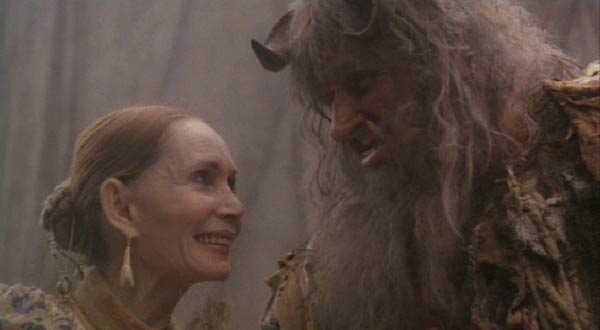
 Regularly rated Britain's best sitcom,
  The characters of Fawlty Towers also include Fawlty's shrewish wife Sybil, whom he describes as his "toxic midget", his "little piranha fish" and able "to kill a man at 10 paces with one blow of her tongue" and the Spanish waiter and bellboy Manuel whose profound incomprehension of English and slapstick manner make him a comedy legend. Perhaps Manuel's funniest performance is in what I believe is one of the best Fawlty Tower's

 "Prease for you to crap hands and give cheering for Itchy Balls!" The Gorgeous Tiny Chicken Machine Show is a parody Japanese talk show developed for the Internet by Korean-American comedienne Kim Evey ("Kiko") and her husband Greg Benson. Developed specifically for YouTube, the show was picked up by Sony and now offers more than a dozen episodes of about five minutes each. The episodes feature absurdist comedy and frenetic antics. Comedy doesn't necessarily analyze well, the show is simply hilarious, and one's best introduction is just to watch it. Due to risk of choking, please
  In Pedro Almodovar's
  Both movies featue drama and struggle between women slinging guns as they ride.
 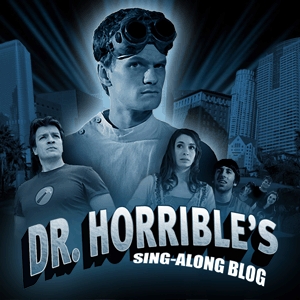 Created by Joss Whedon (of Firefly and Buffy The Vampire Slayer fame) during the 2008 Writer's Guild strike, this three-act 43 minute musical comedy starring Neil Patrick Harris (of Doogie Hauser fame) as the eponymous evil villain was designed for internet distribution and has earned a well deserved cult following since its release in the Summer of 2008. Dr. Horrible is an evil yet sympathetic underdog determined to get the credit his genius deserves at any cost. He competes unsuccesfully with the bumbling, crude and egotistical Captain Hammer for fame and the love of Penny, a kind-hearted worker with the homeless. The production is both humorous and poignant. We laugh at, yet sympathize with Dr. Horrible in his quest to defeat the undeserving "hero" Captain Hammer. The story ends with a cliff-hanger, and I for one would pay good money to see it resolved. You don't have to pay money to see it the story unfold. Here is the article at
  This dark BBC sitcom is a US cult classic. The story of Victor Meldrew, a security man forced to retire from his desk job when he is replaced by an intercom, is frequently absurd in a way that resembles the very American classic sitcom, Seinfeld. Meldrew spends his day complaining about life's little miseries, miseries which he often goes to great lengths to get himself involved in. In one episode, he manages to get himself buried neck-deep in the garden by a man he has hired to dig a trench. In another, after he and his wife each mistakenly think that a friendly couple had invited them to spend the weekend at their sea-side residence in order to wife swap, Mr. Meldrew sets the offending wife's wig on fire while Mrs. Meldrew tosses the husband off a pier. This episode, Hearts of Darkness, starts slow, with an increasingly disastrous country outting, and ends with Meldrew leading a nursing home in revolt against its tyrannical staff. Here are
 Interrogate, Obsess, Embarass, Excite, Thrill, Humiliate. These are not terms from a spy novel, or some trashy sitcom starring Sarah Jessica Parker. They are cooking terms from the BBC's satirical gem,
  WASHINGTON—The National Endowment for the Arts announced Monday that it has begun construction on a $1.3 billion, 14-line lyric poem—its largest investment in the nation's aesthetic- industrial complex since the $850 million interpretive-dance budget of 1985.