While George Gershwin, 1898-1937, is noted as perhaps the most prestigious American classical composer of the Twentieth Century, his influence on modern popular music can be compared only with such greats as Duke Ellington and the Beatles. His folk Opera, Porgy And Bess, fuses the blues, jazz and classical forms. Summertime is perhaps the best known of the songs of Porgy and Bess, but My Man's Gone now is the most challenging and rewarding of its compositions.
Nina Simone, 1933-2003, was perhaps one of the most accomplished jazz performers of the Twentieth Century, a composer and pianist in her own right, her perfomances benefited from her composer's ability to adapt a work and her virtuoso skill as a singer. Her incredible power and emotion were showcased in a voice with exceptional range. In the West this High Priestess of Soul held a place comparable to that of Umm Kulthum on the Levant. Pegged in later life as a protest singer, and suffering from personal difficulties, she became an exile to Barbados, Liberia and France. This should not overshadow her musical accomplishment.
Here you can enjoy the fusion of these two great artists of the last century, with Nina Simone's signature recording of what I consider Gershwimn's greatest work, My Man's Gone Now, from Porgy and Bess:
The Year 2008 saw an innovation in video gaming that, to the best of my knowledge, was a first. That was the year that the famous novelist, screenwriter and philosopher Ayn Rand made the jump into this immensely popular form of entertainment. And with no less than Bioshock, one of the most popular games of the year. From Wikipedia: "The game [designed by Ken Levine] received overwhelmingly positive reviews, and ranks as the thirteenth best video game on Game Rankings based on reviews from critics. It was particularly well-reviewed in the mainstream press where its "morality-based" storyline, immersive environment and Ayn Rand-inspired dystopic back-story were all singled out for praise."
Rand is known to many as the author upon whose work the classic film The Fountainhead with Gary Cooper and Patricia Neal was based. She is known to others as the author of the 1957 apocalyptic blockbuster Atlas Shrugged. And she is infamous for her pro-individualist and pro-capitalist philosophy, Objectivism, which rejects skepticism, relativism and mysticism, and advocates a heroic view of man and argues that your personal happiness is the proper goal of enlightened moral action.
Of course, Bioshock doesn't provide a clear or even fair picture of Rand's thinking. That isn't its goal. Its goal is to entertain, which it does. Bioshock's clearly Rand-like anti-hero, Andrew Ryan, points the way to the philosophy almost inadvertently. In the game, this character builds an utopia based on individuality and non-intervention which has turned into a dystopia. Obviously this is not a particularly flattering picture of her philosophy. One thing is crucial though, you can't present a dystopia without somehow showcasing the values that the society was trying to achieve.
For a member of a generation that never had contact with a living Ayn Rand, this is important. I was a child when she died, and there honestly isn't a push among the old guard Objectivists to reach out. Some of us who played, and loved, this game had eyes to see, ears to hear. Some of us put down our controllers for a moment and picked up Atlas Shrugged and The Fountainhead. A smaller percentage found Rand's pro-freedom, pro-man, pro-happiness philosophy to truly resonate with us and began to pursue it with vigor – hopefully enough to bring it to a new generation. I haven't played Bioshock in months, although the announced sequel and movie may change that. But I find I apply some aspect of philosophy in my life every day. All from a game that used some compelling concepts as window dressing, and inadvertently pointed the way to something profound. For a video game, that is truly historic. – Ryan Keith Roper
For those who are interested in learning more about Bioshock, (at Wikipedia here) this is a helpful video from YouTube:
For those who want to learn about Ayn Rand, here is her classic film, The Fountainhead:
Orson Welles called her the most exciting woman in the world. There certainly was none with more raw charisma, class and charm. Born in South Carolina in 1927 her career spanned seven decades, television, stage, film, radio and cabaret. She recorded Santa Baby in 1953, starred as Cat Woman on TV's Batman (who else could have upstaged Julie Newmar?) and worked until the end. Born on Benjamin Franklin's birthday, she left on Christmas. Here she is in 1962, singing I Want to be Evil:
On December 25, 1989, Leonard Bernstein gave a concert in Berlin celebrating the end of the the Berlin Wall. The centerpiece was the performance of Beethoven's 9th symphony (Ode to Joy) with the word Freude "Joy" changed to Freiheit or "Freedom" in the choral fourth movement. When Schiller wrote the original poem, to dedicate it to Freedom had been his intent. But out of fear that his use of Freiheit would be seen as support for the Napoleon, he changed his subject to the less controversial Freude.
According to Wikipedia, the orchestra and chorus for the 1989 Christmas concert were drawn from both East and West Germany, as well as the United Kingdom, France, the Soviet Union, and the United States. Enjoy this special Christmas treat available at YouTube. Here is part I of the fourth movement, with the chorus beginning in part II:
Early this month, as a Nativity display was erected in the state house of Olympia, Washington, another sign was making the news. A purported "atheist" sign was erected there, not in order to celebrate anything, but to proclaim "there are no gods, no devils, no angels, no heaven or hell." The sign did refer obliquely to the Winter Solistice, which is both a natural phenomeneon and a pagan holiday. And few people dispute that Christmas is suspiciously timed in relation to this event and the pagan holiday known as Yule or Saturnalia. But the timing of New Year's Day is just as coincidental. And the fact remains that the Nativity scene, presumably erected by Christians, did not feature a sign arguing that atheists will burn in hell. Nor have prior menorahs come with disclaimers proclaiming gentiles to be unclean.
Of course, this contrarian sign, displayed with the sole intent of annoying Christians (it did not criticize jihad, ouija or circumcision) was promptly stolen. And that made headlines too. Although I am not a believer, I have stated elsewhere that, in the words of Camille Paglia, I find that "atheism alone is a rotten corpse." There are an infinite number of things in which we don't believe. I don't care what you don't believe, just as much as I find it unhelpful, when planning a trip, to have a list of places that you are not interested in visiting. Life is too short to focus on the negative. We are born happy. But some of us spend an aweful lot of time trying to be unhappy.
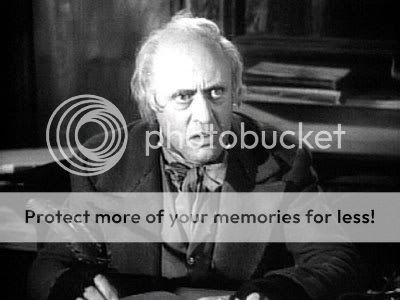
One thing that I have long enjoyed is the classic sit-com, Seinfeld. In the episode "The Strike" George Costanza, one of the most eagerly miserable of characters in the history of comedy, is caught in one of his schemes, and in order to exculpate himself he ends up inviting his boss to dinner not for Christmas, but for his family's peculiar celebrations of Festivus, a holiday "for the rest of us." The episode is in part a sendup of the modern Political Correction of the Christmas season. The fact that the largest holiday of the Western year is for some people a holy day has become an excuse for the most awkward self-abasement and circumlocution. Festivus is portrayed as the sort of actually embarrassing holiday, with its feats of strength and its airing of grievances, which you might think the celebration of Jesus' birthday would have to be for people to be so fervent in their desire to avoid naming it.
This made-up holiday is so bizarre, and so appropriate for George and his disfunctional family, that you might think that it was invented specifically for Seinfeld. But it turns out that Seinfeld writer Daniel O'Keefe's father Dan had actually created Festivus in 1966 as a commemoration of his first date with his future wife. The original holiday, celebrated in February, did not feature an aluminum pole – a symbolically denuded Christmas tree. On Seinfeld, celebrants had a chance to tell off everybody who had annoyed them during the year. And the hellish holiday didn't end until someone pinned the head of the household in a wrestling match. If you want to know how the original feast was celebrated, you can read O'Keefe's book, The Real Festivus.
Festivus has entered the culture. There is also a book called Festivus, a Holiday for the Rest of Us, which deals with the mainstreaming of this celebration. And in 2008, in Illinois (but apparently not Washington) a Festivus pole was erected in the Capitol rotunda. Maybe two thousand years from now Jerry Seinfeld will be the patron saint of comedy. Maybe not. But at least, unlike the cheerless naysayers in Olympia, he knew how to laugh.
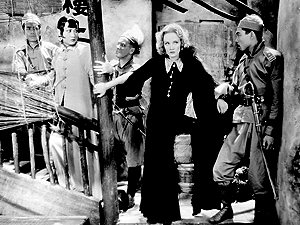
"It took more than one man to change my name to Shanghai Lily." This 1932 pre-code classic, directed by Joseph von Sterberg and starring Marlene Dietrich, Clive Brook and Anna May Wong, is one of the early greats of the last century. Dietrich plays a woman who, after losing her love after a silly stunt to make him prove the strength of his affection, becomes a "coaster" – a woman who makes her living by her wits along the coast of China. Boarding the coastal express from Peiping to Shanghai, her love, military surgeon Captain Donald Harvey learns that she is now none other than the notorious Shanghai Lily.
Sternberg and Dietrich collaborated on seven films. It is easy to see why they liked working together. Dietrich's genuine charisma on stage and off is the stuff of legends, and she is in top form here. Sternberg is limited by the technical capabilities of the era. There are, for instance, no zooms. There is only one shot, a scene in a corridor, where the camera moves other than to pan left or right. But Sternberg knows how to use his lead, highlighting her pale beauty with dramatic poses, the use of shadow and spotlight, and the use of one black, one white, and one midtone-grey form in the foreground of most shots.
While the story does feature stock characters, the compulsive gambler, the prudish matron, and the corrupt and cowardly opium merchant, it also has witty lines, complex leads, and true drama. Along with our heroes, the mysterious Henry Chang (Walter Oland, a Swede, famous for his role as Charlie Chan) boards the train. Questioned early on by the clueless loudmouth gambler, Chang admits that he is only half Chinese, and he is not proud of his white ancestry. Also on the train is Hui Fei, (the Chinese-American trailblazer Anna May Wong) another courtesan who some viewers suspect was Lily's former lover. After the train is stopped by revolutionary forces, we learn that Chang is the rebel leader. He holds Captain Harvey hostage. Lily and Hui Fei each get a chance to shine in dealing with Chang, who himself is not an unsympathetic villain.
The movie features some interesting lines and takes some sophisticated shots at conventional hypocrisy. Hui Fei tangles with the boarding house matron, who assures her and Lily that she "only associates with ladies of the highest standards." While her standards turn out to be gossip and fawning over a silly pet dog, Hui Fei shows her mettle as she earns a government reward with some quick and practical action. Early on, Captain Harvey, who loves Lily but doesn't want to admit it, punches Chang for trying to take advantage and tells her that he "would have done it for anyone." Lily returns the favor, lying to Harvey that she too, "would have done it for anyone."
This film is a true joy to watch. It has long been unavailable on US-format DVD. (But see here.) It does play on occasion on Turner Classic Movies. And it is available here at Youtube:
Now that winter has arrived, it's the time for those of us in the north to think of snow. Indeed, some have already had their fill of it. Leaving New York the other day I enjoyed watching the snowfall from the cabin of my train car. The poster child for Radicals for Happiness has been enjoying making snow angels. Elsewhere, philosophers are debating whether snow is white. And the truth is, it is not. Snowflakes are crystals of ice, which itself is clear.
Ice crystals form the most varied of natural gemstones. They are gems, no less so than diamonds or amethyst, even if only delicate and ephemeral ones. And to truly enjoy them, one needs a good lens. Every child learns that each snowflake is unique. But we also think of them as flat and six-sided. But they can be flat, elongate, solid or round, triangular, six-sided, twelve-sided or shaped like a tetrahedron, or like the spiky jacks from the old-fashioned children's game.
Snowflakes are varied in a way that you just don't find with quartz or zircon. Yet they are not so permanent or easy to hold in your hand. But like over fifteen million other web surferes, you can take a look at a wonderful website that not only displays some beautiful images, but which also explains the myriad different types of snow and the conditions under which such kinds as prisms, plates, dendrites and rosettes form. Take a look at Cal Tech's snowflake website page, from which the images here have come.
Radicals for Happiness focuses on matters which bring people joy of all kinds, from the light-hearted to the profound. The purpose of this site is to share things of value. If a post makes you laugh, smile, think or shed a tear, it has done its job. Please let us know what you like with your comments!
What do readers say?
Ted, I can't tell you what a favor you've done me. ... I discovered your link to Orson Welles' old radio series, Mercury Theater, and I'm in the process of delightedly dowloading all of the shows. When I was a child, I insisted on getting permission from my parents to stay up Sunday evenings, in order to listen to Mercury Theater; I was entranced by Welles' wonderful plays and by his magnificent speaking voice. That Sunday evening hour was one of the highlights of my week, which nothing could have persuaded me to miss. And now I have it back. Many, many thanks.
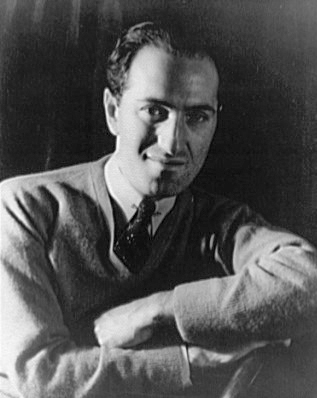 While George Gershwin, 1898-1937, is noted as perhaps the most prestigious American classical composer of the Twentieth Century, his influence on modern popular music can be compared only with such greats as Duke Ellington and the Beatles. His folk Opera, Porgy And Bess, fuses the blues, jazz and classical forms. Summertime is perhaps the best known of the songs of Porgy and Bess, but My Man's Gone now is the most challenging and rewarding of its compositions.
 Nina Simone, 1933-2003, was perhaps one of the most accomplished jazz performers of the Twentieth Century, a composer and pianist in her own right, her perfomances benefited from her composer's ability to adapt a work and her virtuoso skill as a singer. Her incredible power and emotion were showcased in a voice with exceptional range. In the West this High Priestess of Soul held a place comparable to that of Umm Kulthum on the Levant. Pegged in later life as a protest singer, and suffering from personal difficulties, she became an exile to Barbados, Liberia and France. This should not overshadow her musical accomplishment.
 The Year 2008 saw an innovation in video gaming that, to the best of my knowledge, was a first. That was the year that the famous novelist, screenwriter and philosopher
 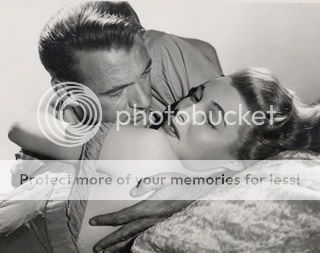 Rand is known to many as the author upon whose work the classic film
 For a member of a generation that never had contact with a living Ayn Rand, this is important. I was a child when she died, and there honestly isn't a push among the old guard Objectivists to reach out. Some of us who played, and loved, this game had eyes to see, ears to hear. Some of us put down our controllers for a moment and picked up
  Orson Welles called her the most exciting woman in the world. There certainly was none with more raw charisma, class and charm. Born in South Carolina in 1927 her career spanned seven decades, television, stage, film, radio and cabaret. She recorded
  On December 25, 1989, Leonard Bernstein gave a concert in Berlin celebrating the end of the the Berlin Wall. The centerpiece was the performance of Beethoven's 9th symphony (Ode to Joy) with the word
  Early this month, as a Nativity display was erected in the state house of Olympia, Washington, another sign was making the news. A purported "atheist" sign was erected there, not in order to celebrate anything, but to proclaim "there are no gods, no devils, no angels, no heaven or hell." The sign did refer obliquely to the Winter Solistice, which is both a natural phenomeneon and a pagan holiday. And few people dispute that Christmas is suspiciously timed in relation to this event and the pagan holiday known as Yule or Saturnalia. But the timing of New Year's Day is just as coincidental. And the fact remains that the Nativity scene, presumably erected by Christians, did not feature a sign arguing that atheists will burn in hell. Nor have prior menorahs come with disclaimers proclaiming gentiles to be unclean.
  Of course, this contrarian sign, displayed with the sole intent of annoying Christians (it did not criticize jihad, ouija or circumcision) was promptly stolen. And that made headlines too. Although I am not a believer, I have stated elsewhere that,
  One thing that I have long enjoyed is the classic sit-com,
  This made-up holiday is so bizarre, and so appropriate for George and his disfunctional family, that you might think that it was invented specifically for
 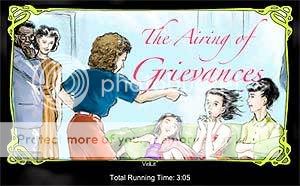 Festivus has entered the culture. There is also a book called
  "It took more than one man to change my name to Shanghai Lily." This 1932 pre-code classic, directed by Joseph von Sterberg and starring Marlene Dietrich, Clive Brook and Anna May Wong, is one of the early greats of the last century. Dietrich plays a woman who, after losing her love after a silly stunt to make him prove the strength of his affection, becomes a "coaster" – a woman who makes her living by her wits along the coast of China. Boarding the coastal express from Peiping to Shanghai, her love, military surgeon Captain Donald Harvey learns that she is now none other than the notorious Shanghai Lily.
 Sternberg and Dietrich collaborated on seven films. It is easy to see why they liked working together. Dietrich's genuine charisma on stage and off is the stuff of legends, and she is in top form here. Sternberg is limited by the technical capabilities of the era. There are, for instance, no zooms. There is only one shot, a scene in a corridor, where the camera moves other than to pan left or right. But Sternberg knows how to use his lead, highlighting her pale beauty with dramatic poses, the use of shadow and spotlight, and the use of one black, one white, and one midtone-grey form in the foreground of most shots.
 While the story does feature stock characters, the compulsive gambler, the prudish matron, and the corrupt and cowardly opium merchant, it also has witty lines, complex leads, and true drama. Along with our heroes, the mysterious Henry Chang (Walter Oland, a Swede, famous for his role as Charlie Chan) boards the train. Questioned early on by the clueless loudmouth gambler, Chang admits that he is only half Chinese, and he is not proud of his white ancestry. Also on the train is Hui Fei, (the Chinese-American trailblazer Anna May Wong) another courtesan who some viewers suspect was Lily's former lover. After the train is stopped by revolutionary forces, we learn that Chang is the rebel leader. He holds Captain Harvey hostage. Lily and Hui Fei each get a chance to shine in dealing with Chang, who himself is not an unsympathetic villain.
 The movie features some interesting lines and takes some sophisticated shots at conventional hypocrisy. Hui Fei tangles with the boarding house matron, who assures her and Lily that she "only associates with ladies of the highest standards." While her standards turn out to be gossip and fawning over a silly pet dog, Hui Fei shows her mettle as she earns a government reward with some quick and practical action. Early on, Captain Harvey, who loves Lily but doesn't want to admit it, punches Chang for trying to take advantage and tells her that he "would have done it for anyone." Lily returns the favor, lying to Harvey that she too, "would have done it for anyone."
 Now that winter has arrived, it's the time for those of us in the north to think of snow. Indeed, some have already had their fill of it. Leaving New York the other day I enjoyed watching the snowfall from the cabin of my train car. The poster child for Radicals for Happiness has been enjoying making snow angels. Elsewhere, philosophers are debating whether snow is white. And the truth is, it is not. Snowflakes are crystals of ice, which itself is clear.
  Ice crystals form the most varied of natural gemstones. They are gems, no less so than diamonds or amethyst, even if only delicate and ephemeral ones. And to truly enjoy them, one needs a good lens. Every child learns that each snowflake is unique. But we also think of them as flat and six-sided. But they can be flat, elongate, solid or round, triangular, six-sided, twelve-sided or shaped like a tetrahedron, or like the spiky jacks from the old-fashioned children's game.
 Snowflakes are varied in a way that you just don't find with quartz or zircon. Yet they are not so permanent or easy to hold in your hand. But like over fifteen million other web surferes, you can take a look at a wonderful website that not only displays some beautiful images, but which also explains the myriad different types of snow and the conditions under which such kinds as prisms, plates, dendrites and rosettes form. Take a look at