
President Crockerman asked, "Do you believe in God?" Without a moment's hesitation, the Alien replied "We believe in Punishment."
Greg Bear, born in 1951, is a Hugo and Nebula award winning author of some three dozen novels and short story collections. A writer of hard science fiction, he often focuses on biology, especially diseases and microbiology. His Nebula winning
Darwin's Radio and its sequel
Darwin's Children explore political repression, retroviruses and speciation.
Vitals deals with bacteria as communal organisms, as well as devling entertainingly into conspiracy theories. (You will never guess who the KGB has kept alive in a fishtank in the middle of modern Manhattan.) His Hugo winning
Blood Music (expanded from a Nebula Winning novella) portrays an apocalyptic transformation of the nature of the self brought on by the escape of genetically enhanced human blood cells down a bathtub drain.

One of his best reviewed books,
The Forge of God, deals not with microbiology, but with the Fermi Paradox. If the galaxy is full of alien life, then why aren't they here yet? Why have aliens not yet visited the earth? The answer quickly becomes evident. First, the Jovian moon Europa disappears. Then mountains appear overnight where there was none before in Australia and in Death Valley. Robots promising a golden age emerge from the Australian mountain. In America an enigmatic alien is found near death, apologizing for bearing bad news, and telling the president its simple punitive theology.

Bear is not only a great story teller, he is an artist of literary caliber. His works feature complex interwoven plots with twists that surprise the reader yet fit seamlessly together without resorting to the arbitrary deus ex machina. His characters are well developed, strongly individuated. In Forge of God, the president, a likeable man, is driven to the edge of insanity by the revelation that the world will soon end. His response is religious in form, but Bear does not portray him as some mindless religious stereotype, and, in a touch of sophistication, the populist preacher that Crockerman summons to advise him in fact doubts the appropriateness of a religious response to the physical threat and turns to the president's science advisors to admit that he is out of his league and that the Presdient could perhaps use some more conventional strategic advice.
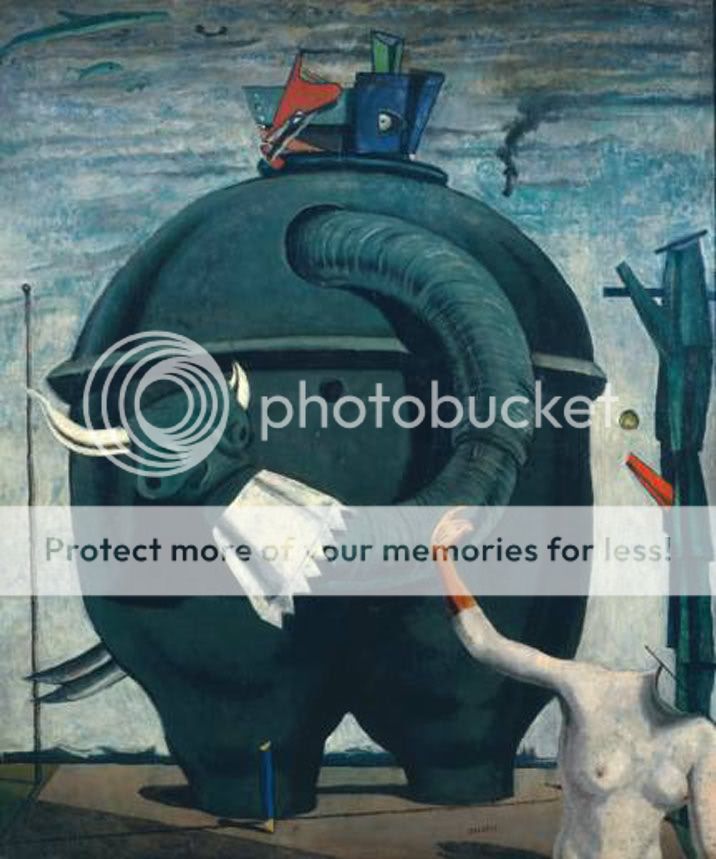
Whether likening squiggles of toothpaste to little blue tadpoles in the sink or graphically comparing the City of Los Angeles, its citizens transformed into blobs of jelly and sentient fungal growths by a plague, to a vision from a Max Ernst painting, Bear uses vivid concrete images that often approach the poetic in their evocativeness. One can form a detailed mental image of his characters' physical traits and their bearing and gestures. Conflict is well motivated, antagonists act not just out of opposition, but because of an alternate, if mistaken view of the good. Psychology is made apparent through telling thoughts and dialog. Yet facts not known to the characters are not revealed to the reader until they become clear to the protagonists. This maintains a sense of realism and especially of suspense. Is the dying alien in league with the supposed robot benefactors? Is the earth truly at risk? The aliens provoke paranoia in some and disbelief in others. What, we ask, are the plots within the plots?

If you have not read Bear, you can think of him as combining the fast-paced plots of Larry Niven and his knack for contemporary social commentary with the analytic depth and literary quality of Frank Herbert. While I have not been able to get into his
The Way,
Queen of Angels, or
Songs of Earth and Power series, I have thorougly enjoyed all the books of his which I have read past the first few dozen pages. The apocalptic
Forge of God, with its epic and very differrent but highly complimentary sequel,
Anvil of Stars, is a good place to start.

Read the excellent
article on Bear at Wikipedia. Check out his
official website. And pick up one of his books, today. The painting above,
Into The Forge of God, by
Alan Gutierrez depicts the launch of a NASA probe into Jupiters atmosphere and was used on the cover of Bear's novel.
 Based on the hit Broadway play which starred Lauren Bacall and Brenda Vaccaro, the 1969 film, Cactus Flower, with Ingrid Bergman, Walter Matthau and Goldie Hawn is a lighthearted romantic comedy which earned its female leads Golden Globes and wan newcomer Hawn an Oscar in her debut supporting role. The film tells the story of a philandering dentist whose affair facilitating alibis catch up with him when he decides to play it straight. He has lied to his girlfriend, telling her that he is unhappily married, when he is in fact single, but does not want to commit. Now he not only needs to find a pretend wife, but he also has to divorce her.
 Bergman plays successfully against type. Her go-go dancing scene in the film inspired the infamous Elaine Benes dancing scene in TV's Seinfeld. Rick Lenz, who plays Igor Sullivan, Hawn's handsome neighbor, sounds eerily like James Stewart. The writing is funny, if typical sit-com fare. Matthau and Hawn fall out of love but each falls into another. The youngsters are in many ways more mature than their elders. The ending is happy and plausible. In the end, the cactus blooms. This film makes few demands, but it is a rewarding delight. The film plays occasionally on cable, including Turner Classic Movies, where I first saw it. It is also available on DVD and here at YouTube:
 Journalist, author, Broadway critic, and talking head
  Although I am a huge fan of Pedro Almodóvar, I cannot recommend all of his films. Some are simply much too dark, and
  If you are a fan of one of the best shows on TV,
  Directed by Welles,
  Like many of Welles' films, such as the difficult
  Sally Potter's 1992 film,
  While certainly more a cerebral excercise than an action flick, the story maintains interest with several short parts set in ages from the Sixteenth to the Twentieth Centuries. Orlando, born a nobleman in Tudor England, becomes a paramour of the aging queen who grants him an estate with the proviso that he not fade, that Orlando not age. Orlando complies, falling into a deathlike sleep every few decades to awaken rejuvenated, and, after one transformation, as a woman. With gay icon Quenton Crisp playing Elizabeth and Swinton playing a person who changes gender, this has been seen as a gay film. But Crisp simply plays Elizabeth as Elizabeth, with no camp and no agenda. Orlando's sex change is treated matter-of-factly and Orlando's love interests are heterosexual to his or her gender of the moment. Any attempt to shoe-horn this timeless film into a serving a parochial modern agenda is a disservice to it and its audience.
 Filmed in England and Khiva, Uzbekistan (as a stand in for Constantinople) the film is full of atmosphere. Eschewing the 'Technicolor' cinematography of such films as
 While it failed to chart in the US and only reached 24 in the UK, David Bowie's and Brian Eno's collaborative single "
 Originally conceived as an instrumental track, "Heroes" was the intended title for the peice even before Bowie composed the lyrics. The guitars, percusion, synthesizers and intentional feedback and reverb (see
  The song has been recorded in English and German as well as several other languages and the conservative American magazine
